The Principles and History of Japanese Zen Gardens — And How They Guide Your Own Design

Photo by Yue
Across centuries and continents, Japanese Zen gardens have fascinated people with their quiet beauty and deeper meaning. Far more than ornamental landscapes, these spaces embody a philosophy of mindfulness, simplicity, and harmony with nature. Every stone, ripple of gravel, and patch of moss carries symbolism, reflecting principles that have guided Japanese culture for generations.
In this blog, we’ll explore the rich history and cultural significance of Zen gardens, tracing their evolution from temple courtyards to modern adaptations. Along the way, we’ll uncover the timeless design principles—such as simplicity, asymmetry, and stillness—that make these gardens so unique. And importantly, we’ll show how you can apply these same principles to create your own Zen-inspired space, whether it’s a backyard retreat, a courtyard corner, or even a small balcony.
A Japanese Zen garden is not just something to admire—it’s something to experience, understand, and, with the right approach, create for yourself.
Why People Are Drawn to Japanese Zen Gardens
Across the globe, Zen gardens are admired not just for their beauty but for the way they make you feel. They’re designed to be understood, not simply admired.
Common reasons Australians are embracing Zen garden ideas include:
- Symbolism – Rocks, sand, and moss symbolise mountains, rivers, and forests.
- Artistry – Every element is deliberate, creating balance and meaning.
- Simplicity – Minimal design clears visual clutter and encourages stillness.
In essence, a Japanese Zen garden serves two roles: a visual landscape to enjoy and a meditative space to use.
What Is a Japanese Zen Garden?

Photo by tekinturkdogan
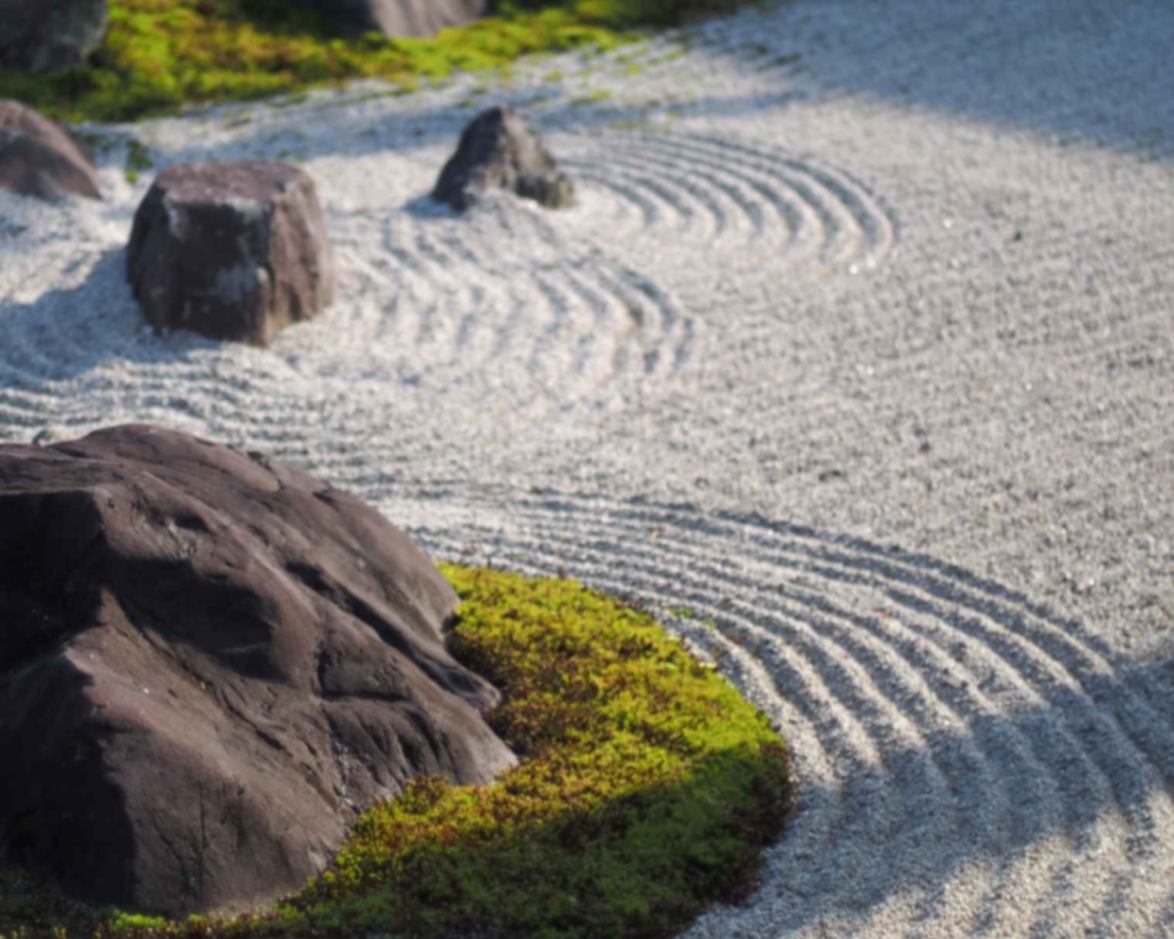
“Zen” translates as meditation. A Japanese Zen garden (karesansui) is a dry landscape that represents natural scenery using rocks, gravel, and minimal plants. Instead of water features, raked gravel or sand symbolises rippling water, while stones stand in for mountains or islands.
The goal is to create a space for meditation and reflection. These gardens are usually enclosed by hedges, timber screens, or walls to provide privacy and cut out distractions — something you can easily adapt in an Australian backyard with bamboo fencing or simple timber panels.
Tip for homeowners: Start with a flat, contained space (even 2x2 metres will work) and frame it with natural boundaries before adding sand and stones.
Expert insight: The writer Lafcadio Hearn once said, “in order to comprehend the beauty of a Japanese garden, it is necessary to understand – or at least to learn to understand – the beauty of stones.” Rocks are the foundation of Japanese Zen garden ideas, embodying permanence and strength.
Structure (Karesansui)
A typical Zen garden is made up of:
- Rocks and stones – Placed in groups, symbolising mountains or islands. Use larger boulders as anchors and smaller stones for balance.
- Gravel or sand – Spread evenly and raked into lines or ripples to represent flowing water. Crushed granite or white gravel works well in Australia.
- Minimal greenery – Moss, a small shrub, or groundcover around rocks for softness.
- Enclosure – A simple fence, hedge, or wall to create a sense of stillness and seclusion.
Practical note: You don’t need water, statues, or ornate décor. A rake, gravel, and a few carefully chosen stones are enough to begin.
Difference from Other Japanese Garden Types
- Tea gardens invite walking, with stepping stones and water basins.
- Strolling gardens are lush, with ponds and flowering plants.
- Zen gardens are minimal and designed mainly to be viewed, not walked through.
This makes them ideal for smaller Australian homes and courtyards where space is limited.
Contrast with Western Gardening
In Western gardens, colour, flowers, and variety dominate. Stones are often seen as obstacles to remove.
In aJapanese Zen garden, stones are the central feature. Plants and colour take a back seat. The design is about balance, emptiness, and focus rather than abundance.
How this helps you: If you find maintaining lawns or flowerbeds overwhelming, a Zen garden offers a low-maintenance alternative. Gravel suppresses weeds, and minimal planting means less watering — ideal for water-restricted areas in Australia.
Scale and Settings
Traditional Zen gardens are small, enclosed spaces, often found in monasteries. They’re usually meant to be viewed from a single spot — like a veranda — rather than walked through.
For Australian homes, this works perfectly in:
- Courtyards – A compact space with gravel and one or two boulders.
- Side yards – Often narrow, making them ideal for minimalist layouts.
- Balconies – A tabletop sand tray with a few stones creates a micro Zen garden for apartment dwellers.
Also Read: Japanese Zen Garden Ideas: Tranquil Design Principles for Effortless Outdoor Serenity
The 7 Guiding Principles of Zen Design (with Practical Tips)

Photo by joshuaraineyphotography
Japanese Zen gardens are built on seven timeless principles. Think of them as a design framework rather than strict rules. The goal isn’t to copy a Kyoto temple courtyard but to bring the same sense of harmony into your own home garden — whether that’s a full backyard or a narrow patio.
Here’s how each principle works, with practical tips you can apply in an Australian setting.
#1. Simplicity (Kanso) – Less Is More
At the heart of every Japanese Zen garden design idea is simplicity. Stripping away the unnecessary creates clarity and space for calm.
How to apply it:
- Avoid clutter. Pick one or two focal points (a stone arrangement or a raked sand bed).
- Stick to muted, natural colours — greys, beiges, sandy whites, and green moss tones.
- Resist the temptation to add flowering plants or garden ornaments.
Pro tip: In Australia, crushed decomposed granite or white quartz gravel makes a perfect substitute for traditional Japanese white sand, keeping the look clean and low-maintenance.
#2. Austerity (Kōko) – Value in Restraint
Austerity is about appreciating the beauty of restraint. Rather than filling every corner, Zen gardens embrace empty space as part of the design.
How to apply it:
- Limit your materials to three or four: gravel, rocks, timber, moss.
- Choose fewer, larger stones instead of scattering many small ones.
- Leave open spaces — they represent possibility, calm, and balance.
Pro tip: A single weathered boulder, left unpolished, can become the heart of your garden. Look for naturally shaped basalt or sandstone at your local landscaping supplier.
#3. Asymmetry (Fukinsei) – The Beauty of Imperfection
Zen gardens avoid perfect symmetry. Uneven groupings and irregular spacing create a more natural flow, reflecting the real world.
How to apply it:
- Place stones in groups of three or five rather than even numbers.
- Offset stepping stones or timber pathways instead of laying them in straight lines.
- Avoid centring features perfectly — allow slight irregularity.
Pro tip: In landscaping, odd numbers are visually stronger. A trio of upright stones can represent mountains, while the gravel around them symbolises flowing rivers.
#4. Naturalness (Shizen) – Celebrate the Wild
This principle honours nature’s raw, unpolished beauty. A Zen garden isn’t about perfection but about allowing natural growth and textures.
How to apply it:
- Use local, organic materials instead of polished or artificial ones.
- Incorporate native groundcovers like dichondra repens or native violet in shaded corners as substitutes for moss.
- Let lichen and moss establish naturally on rocks rather than scrubbing them clean.
Pro tip: If you live in a dry climate, drought-tolerant plants like lomandra or mondo grass work beautifully without breaking the Zen aesthetic.
#5. Subtlety (Yūgen) – Hints of the Hidden
Subtlety creates mystery, suggesting there’s more to the garden than meets the eye. This principle keeps the design intriguing and encourages reflection.
How to apply it:
- Use bamboo screens or hedges to partially obscure areas of the garden.
- Design winding gravel paths that reveal the view gradually.
- Place a feature stone or lantern where it’s partly hidden by foliage.
Pro tip: For small yards, a simple L-shaped screen made of bamboo or slatted timber can create the illusion of depth and mystery without needing extra space.
#6. Unconventionality (Datsuzoku) – Breaking the Expected
A Zen garden thrives on surprise — one element that breaks predictability and encourages new ways of seeing the space.
How to apply it:
- Introduce a feature that feels unexpected, like a single black stone among lighter gravel.
- Position a lantern or water basin in an unusual corner, not the centre.
- Use contrasting gravel colours to create bold raked patterns.
Pro tip: A small, solar-powered trickling fountain hidden behind a bamboo screen adds sound and movement without disturbing the calm. In Australia’s climate, this can also help attract birds.
#7. Stillness (Seijaku) – Spaces for Reflection
Stillness is the ultimate goal of any Japanese Zen garden. The design should slow you down, quiet the mind, and invite contemplation.
How to apply it:
- Create a “viewing spot” — a bench, deck edge, or chair where you can sit and look across the garden.
- Keep at least one section completely still: a flat gravel bed, untouched except for raked lines.
- Avoid bold colours or plants that change rapidly with the seasons.
Pro tip: A single upright stone placed in a raked sand bed can symbolise permanence, while the ripples of gravel around it suggest timeless flow. This balance of motion and stillness is the essence of Zen.
For an even deeper sensory experience, consider integrating water into your space. Nero Tapware’s Zen Collection of outdoor showers brings a modern touch of tranquility, pairing perfectly with the meditative atmosphere of a Japanese-inspired garden.
Also Read: [Ultimate Guide] Outdoor Spa Ideas & Backyard Spa Designs (2025 Edition)
Historical Origins, Evolution, and Cultural Significance of Japanese Zen Gardens

View from Hyakumanben Chion-ji Temple Gardens and Majestic Architecture
Photo by GCShutter
Japanese Zen gardens are far more than tranquil landscapes. They are living philosophies — shaped by centuries of Japanese history, religion, and art — that continue to influence how we design calming outdoor spaces today. For Australians, these gardens offer not only beauty but also practical lessons in mindfulness, simplicity, and low-maintenance design.
Heian Era (794–1185): Ornamental Beginnings
What was happening in Japan: Aristocratic estates in Kyoto featured grand gardens inspired by Buddhist paradise imagery. These landscapes showcased:
- Expansive ponds for boating.
- Lush plantings and ornamental bridges.
- Decorative spaces designed for leisure, not meditation.
Cultural Callout: These gardens were about status and spectacle — more theatre than philosophy.
Modern Relevance for Australia: Many Australians still inherit this tradition of ornamental gardens — large lawns, elaborate flower beds, or ponds. But the Zen shift that followed shows how restraint can be more powerful than excess.
Kamakura Period (1185–1333): The Samurai and the Birth of Rock Gardens
What changed: During the Kamakura Period, power moved from the aristocracy to the samurai class. Samurai embraced Zen Buddhism, which valued discipline, stillness, and clarity of mind. Out of this shift emerged the first dry landscape gardens (karesansui).
These gardens used:
- White gravel to represent water (ripples/waves) or emptiness.
- Rocks arranged to symbolise islands, mountains, or spiritual truths.
- Maintenance tasks like raking gravel and pruning trees as forms of meditation.
Did You Know? Raking gravel each day wasn’t about tidiness — it was about training the mind to focus and be present.
Modern Relevance for Australia: For busy homeowners, this simplicity is appealing. A gravel courtyard with a few strategically placed stones is far easier to maintain than a lawn — and it offers the added benefit of a mindfulness ritual.
Muromachi Period (1336–1573): The Peak of Zen Aesthetics
What defined this era: Zen aesthetics became the cultural standard during the Muromachi Period. The garden was no longer a decorative backdrop but a spiritual tool. Other Zen arts — tea ceremony, ikebana (flower arranging), and calligraphy — flourished alongside garden design.
- Gravel patterns symbolised waves, currents, or cosmic order.
- Rocks became symbols of permanence and hidden teachings.
- Flowers were deliberately excluded to strip away distraction.
Cultural Callout: This was the era of true abstraction — where the garden was no longer a copy of nature, but a distilled essence of it.
Modern Relevance for Australia: In compact urban spaces like Sydney courtyards or Melbourne terraces, abstraction works beautifully. A few carefully chosen elements — bamboo, gravel, and stone — can create balance without overcrowding.
Edo Period and Beyond: Warriors as Gardeners
The paradox of the samurai: They were both fighters and philosophers. Many designed gardens to reflect their inner discipline.
One notable example: Ueda Sōko (1563–1650)
- A samurai who founded a tea ceremony school still active today.
- Designer of Hiroshima’s Shukkeien Garden, blending martial precision with meditative beauty.
Did You Know? For samurai, a garden wasn’t just about looks — it was a mirror of personal character.
Modern Relevance for Australia: A well-kept garden can be more than décor. The act of maintaining it — pruning bamboo, sweeping gravel — can itself be meditative, much like mindful home rituals.
Cultural and Spiritual Significance
Across the centuries, Zen gardens have served as living philosophies:
- They embody wabi-sabi — an acceptance of imperfection and impermanence.
- Every act of care, from sweeping to pruning, is a form of meditation.
- They are sanctuaries where visitors find stillness and clarity.
Modern Relevance for Australia: In a fast-paced, noisy world, Australians are increasingly turning to Japanese Zen garden ideas as a way to bring calm into suburban backyards, patios, and even office spaces.
Modern Legacy: Zen Gardens in a Global Context
Today, Zen gardens are no longer limited to Japan.
Shunmyo Masuno, an 18th-generation Zen priest and renowned landscape architect, continues the tradition worldwide. Known as one of the last ishitate-sō (“rock-setting priests”), he believes Zen gardens help restore humanity in overstimulated modern lives.
Australian Connection:
- Zen-inspired gardens can be found in places like Cowra’s Japanese Garden in NSW, the largest Japanese garden in the Southern Hemisphere.
- Many Australian homeowners adapt easy Zen garden design principles — bamboo screens for privacy, gravel paths for low maintenance, or moss under shaded areas — to suit local conditions and council water restrictions.
The Enduring Message: Beyond aesthetics, a Japanese Zen garden is about reconnecting with nature, spirit, and self. It’s not a “style” but a way of living, one that remains as relevant in a Melbourne courtyard as it was in a Kyoto temple.
Pro Tip for Australians: If you’re planning a Zen-inspired garden, check local council landscaping guidelines — especially around drainage and gravel placement. Sustainable choices (like locally sourced stones and drought-tolerant moss alternatives) ensure your garden remains low-maintenance and compliant.
Also Read: Oatmeal Bath Guide: Benefits, DIY Recipes & Skin Relief Tips
5 Core Features of Japanese Gardens & Design Principles

Japanese rock garden at Hojo of Tofuku-ji Temple in Kyoto
Photo by magicflute002
#1. Symbolism Over Literal Representation
Every element in a Zen garden carries deeper meaning. Stones symbolise mountains or islands, gravel represents flowing water, and moss captures the passage of time. Instead of creating literal landscapes, Zen design relies on suggestion — inviting the viewer to interpret and reflect.
Pro Tip: In small urban gardens, consider using contrasting stone sizes. Larger rocks can anchor the space, while fine gravel evokes rivers or waves, adding depth to even tight courtyards.
#2. Minimalism
At the heart of Japanese Zen garden design ideas lies minimalism. Plants are sparse, decorative features are limited, and focus is placed on form and texture rather than ornamentation.
Australian Adaptation: With our harsh summers, opt for drought-tolerant greenery such as dwarf conifers, bamboo, or native groundcovers that can survive with little watering while keeping the minimal look intact.
#3. Wabi-Sabi Philosophy
Zen gardens embrace wabi-sabi — beauty in imperfection and impermanence. Think of moss softening the cracks in stone, or aged timber showing its natural grain.
At Kyoto’s famous Ryōan-ji, only 14 of 15 stones can be seen from any angle — reminding us of imperfection as a design principle.
Practical Insight: Let natural ageing occur. A touch of moss on sandstone pavers in a shaded Sydney courtyard often feels more authentic than forcing perfection.
#4. Ma (Interval / Space) & Yohaku no Bi (The Beauty of Emptiness)
Zen gardens celebrate space as much as substance. Empty gravel expanses calm the eye and allow the mind to wander.
Pro Tip: If your yard is small, don’t feel the need to fill every corner. Leaving space unoccupied can make the garden appear larger and more meditative.
#5. Natural Materials & Sensory Engagement
Stone, timber, gravel, and plants are placed as if shaped by nature. The crunch of gravel, the rustle of bamboo, or the play of moonlight across raked sand all deepen the sensory experience.
Design Note: When designing in Australian suburbs, consider how seasonal winds interact with your garden. Bamboo screens, for example, not only add privacy but also create a calming rustling sound.
Sound is central to Zen design. Just as raked gravel suggests flowing rivers, the gentle stream of water can heighten the feeling of calm. Nero Tapware’s Zen Collection makes it easy to introduce this element into your outdoor space, blending natural simplicity with functional elegance.
Also Read: 40+ Powder Room Ideas: Bold, Modern & Luxury Tips
9 Key Elements of Traditional Japanese Zen Gardens

Kyoto Hyakumanben Chionji Temple
Photo by Kavuto
Designing a Japanese Zen garden is as much about intention as it is about aesthetics. Each element is chosen deliberately, often symbolising larger ideas about nature, mindfulness, and the passing of time. The following elements form the backbone of authentic Japanese Zen garden ideas.
#1. Gravel and Sand
The most recognisable feature of a Japanese Zen garden is its use of pale gravel or sand. Traditionally, gray-white granite gravel (historically Shirakawa-suna) is raked into flowing patterns to suggest rippling water, rivers, or waves. Unlike a path, this surface isn’t for walking — it’s for contemplation.
The act of raking itself is considered meditative. Using a fine-toothed metal rake to smooth the surface, and a wide-toothed rake to draw waves or straight lines, can help quieten the mind after a busy day.
Patterns and Symbolism:
- Straight lines evoke calm and serenity.
- Wavy lines mimic the energy of water and life’s flow.
- “Rivers” are often raked in a traditional east-to-south-to-west direction, reflecting the flow of time.
A tip for Australian homeowners: if your garden is exposed to moonlight, try evening meditation while the light plays across the raked gravel — the shifting shadows create an entirely new dimension of beauty.
#2. Stones and Rocks
If gravel represents water, then rocks are the islands and mountains rising from it. These sculptural forms are the structural anchors of a Japanese Zen garden design. They’re often installed first, with the largest stones carefully placed to create balance.
Symbolism is woven into their placement:
- Vertical stones represent Heaven.
- Horizontal stones symbolise Earth.
- Diagonal stones suggest Humanity, bridging the two.
In Zen philosophy, the space between stones can be just as important as the rocks themselves — a reminder of the beauty found in emptiness.
Pro Tip: Choose stones native to your region, such as granite or basalt, to maintain authenticity while ensuring durability in the Australian climate.
#3. Plants
Unlike lush Western-style gardens, plantings in a Zen garden are minimal and restrained. Foliage, not flowers, takes centre stage. Shades of green are layered subtly to create depth without overwhelming the hardscape.
Common choices include:
- Moss – soft, calming, and low maintenance once established (perfect for shaded areas in southern Australia).
- Japanese Maples (Acer palmatum) – known for their fiery autumn colours and delicate leaves.
- Weeping cherry trees – admired for their seasonal blossoms.
- Evergreen shrubs and dwarf conifers – clipped to suggest miniature forests.
- Bamboo and ferns – excellent for screening and texture.
Each plant carries meaning: pines represent longevity, plums embody resilience through winter, and maples symbolise the richness of change.
Australian Adaptation: In warmer climates, substitute moss with hardy ground covers like dichondra or native violets that mimic the soft look without requiring constant damp conditions.
#4. Enclosure and Screening
Privacy is key to achieving a sense of sanctuary. Traditional Zen gardens often use bamboo fences, timber lattice screens, or clipped hedges to create a boundary between the outside world and your retreat. In Australian backyards, even simple hardwood slats or rendered walls can provide the same effect, enhancing focus and contemplation.
#5. Pathways
Paths in a Zen garden are not just functional — they’re symbolic. Stepping stones laid across gravel contrast beautifully with the raked surface, offering a sense of journey.
- Straight paths suggest formality and guidance.
- Meandering paths invite pauses, encouraging you to slow down.
Pro Tip: Use irregular stone pavers to avoid a “too perfect” look — imperfection is part of Zen philosophy.
#6. Seating
Every Zen garden needs a place to sit and reflect. Whether it’s a stone bench, a timber platform, or even a simple chair positioned at the right angle, seating is about creating stillness. The goal is not comfort for long lounging but a spot to stop and take in the view.
#7. Lighting
While traditional gardens relied on lanterns like Ishi-dōrō (stone lanterns) or Andon lanterns, modern Japanese Zen garden ideas often incorporate discreet LED or solar-powered lighting.
Consider:
- Subtle path lights for safety.
- Uplighting for trees or rocks to highlight their form at night.
- Warm, low-level lighting that avoids harsh glare.
This allows you to enjoy the tranquillity of your garden after sunset.
#8. The Value of Blank Space
One of the hardest concepts for Western gardeners to embrace is leaving empty space. In a Zen garden, these voids aren’t unfinished areas — they’re deliberate, designed to encourage stillness and reflection. Resisting the urge to fill every gap is essential to achieving balance.
#9. Modern Elements for Contemporary Homes
Today’s Japanese Zen garden design ideas often blend traditional symbolism with modern conveniences.
- Lighting: Smart systems, solar lanterns, and discreet LED strips allow for energy-efficient ambience.
- Water Features: Small ponds, recirculating waterfalls, or even simple stone basins can represent renewal and flow.
- Structures: Timber bridges, statues, or bamboo water spouts (shishi-odoshi) can be integrated without overwhelming the minimalist aesthetic.
For Australian homes, a low-maintenance pond with a solar pump can create movement and sound without adding major upkeep.

Nero Tapware’s Zen Collection for Outdoor Use to Complete Japanese Zen Garden Designs
For those wanting to combine tradition with modern living, Nero Tapware’s Zen Collection offers outdoor showers and fixtures that complement minimalist garden design—bringing both function and flow to your sanctuary.
Transform Your Bathroom or Kitchen with Our Full Range
Nero Tapware offers more than just the Zen collection! If you love the look of Zen, you’ll fall for Serenity, Mecca, Opal, York, Bianca, Kara, and more! Our other designs bring fresh perspectives to every style—modern, traditional, and everything in between.
Conclusion & Next Steps
Japanese Zen gardens are more than minimalist landscapes — they are living philosophies shaped by centuries of culture, history, and spiritual practice. From the placement of stones to the emptiness of raked gravel, every element reflects timeless principles of mindfulness, balance, and simplicity. These gardens remind us that true beauty lies not in abundance, but in restraint, and that stillness can be just as powerful as movement.
By understanding their origins and principles, you not only appreciate Zen gardens on a deeper level but also gain the foundation to create your own.
What’s next?
If you’re ready to move from philosophy to practice, our next blog dives into Japanese Zen garden ideas. There, you’ll find practical design tips, layouts, and inspiration to help you bring these principles to life in your own home or outdoor space.
Also Read:
- Coffered Ceilings: Modern Designs, Benefits, Costs & DIY Guide
- Raked Ceilings: Benefits, Design Ideas & Practical Considerations