The Ultimate Guide to Biophilic Design: Nature-Infused Spaces that Boost Well-Being, Performance & Planet Health

Photo by Prystai
We live in times when more of us are craving a connection to nature—even inside our homes, workplaces, and public buildings. Biophilic design answers this by reintroducing natural systems, forms, and elements into built environments. In this guide, you’ll discover how biophilic design interior strategies can transform spaces, uplift people, and create measurable social, economic, and environmental benefits.
You’ll walk through theory, patterns (including the updated 14/15 patterns of biophilic design), implementation strategies, adaptable examples, and actionable design tips you can use right now. Whether you're a homeowner seeking a biophilic design house concept or a designer refining your biophilic design architecture approach, this is your deep dive.
The Roots & Theory of Biophilic Design Concept

Photo by pozitivo
What Is Biophilia — Our Innate Bond with Nature
At its core, biophilia refers to humanity’s intrinsic tendency to seek connection with nature and life forms. The idea was popularised by biologist Edward O. Wilson in the 1980s, and it aligns with research in psychology and neuroscience showing how exposure to nature (even in abstract or indirect form) calms the nervous system, improves attention, and boosts mood.
Over time, designers have drawn on that principle to shape what we call biophilic design—the art and science of bringing nature into architecture, interiors, landscapes and cities in ways that respect ecology and human needs.
What Is Biophilic Design? Definitions & Scope
Biophilic design (or biophilic architecture) is an approach that deliberately connects building occupants with nature through the use of natural materials, forms, and systems. Unlike traditional green building which focuses primarily on energy, materials, and resource efficiency, biophilic design emphasises human experience and psychological well-being. It overlaps with biomimicry, regenerative design and sustainability—but its centrepiece is the human-nature bond.
Dimensions of Biophilic Design
Here’s a breakdown of how many experts categorise biophilic design into three broad dimensions, each giving a different lens:
- Direct experience (nature in the space): This includes features like daylight, fresh air, running water, plants, animals, views to vegetation, changing weather and natural landscapes.
- Indirect experience (natural analogues): This means using natural materials, patterns, colours, textures and forms that evoke nature (for example, timber finishes, stone, fractal patterns), even when a live plant may not be feasible.
- Spatial relationships (nature of the space): This deals with how people move through and within a space — aspects like prospect and refuge, transitions between inside and outside, sense of place rooted in ecology and culture, and organised spatial complexity.
In the Australian context, you’ll see these principles in action when homes maximise cross-ventilation, orient to views of bushland or water, use native vegetation, or embed local materials that reflect a sense of place.
Also Read: Japanese Zen Gardens: Principles, History & How to Create Your Own
Alternative Frameworks: Six Elements
Another useful framework — especially for home owners and smaller scale projects — is the “Six Elements” model of biophilic design. These are:
- Environmental Features — plants, animals, water, light, air, views.
- Natural Shapes & Forms — organic edges, curves, vaults, arches, biomorphic forms.
- Natural Patterns & Processes — fractals, patina of time, change/growth over time, information richness.
- Light & Space — daylighting, varied light and shadow, spaciousness, spatial harmony.
- Place-based Relationships — local ecology, culture, landscape orientation, indigenous materials.
- Evolved Human–Nature Relationships — prospect/refuge, security, curiosity, attachment to place.
When you design a biophilic interior or a biophilic design house, considering these six elements helps you structure your decisions rather than haphazardly picking features.
For instance: choosing timber from local forests addresses element 5 (place-based relationships) and also element 2 (natural shapes & forms) and element 1 (environmental features).
What Biophilic Design Is Not
Important to clarify: not everything that looks “green” is truly biophilic. If you slap a few fake green walls in a windowless room, you might get aesthetic value — but you won’t necessarily tap into the full benefits of biophilic design. Real biophilic design satisfies certain conditions:
- It addresses human needs for natural light, air, vegetation, views and movement, not just decorative features.
- It creates integrated and sustained experiences of nature, not isolated gimmicks.
- It is contextually relevant — responding to the local environment, culture and ecology.
For example: In Australia, we have unique ecosystems, unique light and climate conditions — so the best biophilic design architecture incorporates those specifics rather than importing overseas design templates blindly.
So if you’re planning to adopt biophilic design ideas for your home or business, make sure you ask: “Does this merely look like nature, or does it connect occupants with nature in a meaningful way?”
Evolution & Trends: From Theory to Practice
Biophilic design has matured significantly in the past two decades. Early experiments were mostly interior courtyards and atriums. But in recent years, frameworks like Terrapin Bright Green’s 14 Patterns of Biophilic Design have given structure and vocabulary to what had been a loosely described field. (In 2024, the concept of the “Awe” pattern was introduced or emphasised in newer editions.)
At the same time, standards and rating systems are evolving. Biophilic principles are increasingly referenced in LEED, WELL Building Standard, and the Living Building Challenge, pushing biophilic architecture from novelty to normative in high-performance design.
Also Read: 17 Best Bathroom Plants for Low Light, Humid Environments, & More!
Why Biophilic Design Matters — Benefits Backed by Research

Photo by samael334
1. Psychological & Physiological Benefits
One of the strongest reasons to invest in biophilic design is the robust body of evidence affirming human benefits:
2. Economic & Operational Value
Biophilic design is not just a nice “extra” — it can yield bottom-line returns:
- In workplaces, increased productivity, reduced sick leave, and better staff retention are common claims backed by case studies.
- In healthcare, faster patient recovery (less pain, shorter stays) has been observed when patients have views of greenery or daylight.
- In real estate, tenants may pay premiums for buildings with natural views, light, and wellness branding.
- Energy & maintenance synergies: Smart daylighting strategies, natural ventilation, and passive shading can reduce reliance on artificial systems — though biophilic design is not a substitute for good mechanical and building envelope design.
3. Societal & Environmental Impacts
Beyond individual and organisational gains, biophilic design architecture can contribute to community and ecological goals:
- Heat island reduction: Green roofs, façades, and tree shade cool urban areas.
- Biodiversity support: Green roofs and vertical plantings create habitats for native species and pollinators.
- Urban mental health: Integrating nature into buildings reduces stress and enhances community well-being.
- Climate resilience: Water harvesting, permeable surfaces, and shading manage stormwater and moderate heat extremes.
In Australia, where heat, drought and wildfire are realities, biophilic strategies must be climate-smart, fire-sensitive and locally attuned. A eucalypt courtyard or semi-shaded verandah can be more than aesthetic — it can be climate adaptation in action.
Design insight: Always test biophilic moves against local climate and risk (e.g. bushfire zones, drought) — don’t import greenery or water features blindly.
Also Read:[Guide] Calming Colors in Interior Design: Expert Design Tips to Create Peaceful, Stylish Homes
The 14 (Now 15) Patterns of Biophilic Design: Deep Dive & Application

Photo by pozitivo
To move from concept to design, Terrapin Bright Green’s pattern framework is the industry standard. Here is a guided, in-depth look, with tips especially relevant to Australian conditions and biophilic design house or commercial settings.
(Note: Some sources now refer to 15 patterns, adding or emphasising an “Awe” or “big nature” element.)
Nature in the Space (Direct Experiences)
These patterns refer to direct sensory engagement with nature within the space.
1. Visual Connection with Nature
- Having windows, view corridors, light shafts, planted interior greenery.
- In Australia: orient living areas to bushland, water, coastal vistas or remnant native vegetation (e.g. Sydney, Melbourne hinterland homes).
2. Non-Visual Connection with Nature
- Sound (rustling leaves, water trickle), tactile (raw timber, stone), smell (green foliage).
- Use textured surfaces (local stone, drought-tolerant native foliage) that resonate with place.
- Use subtle ambient soundscapes in interiors (e.g. gentle water feature).
3. Non-Rhythmic Sensory Stimuli
- Natural movements, unpredictable light, flickers, breezes.
- e.g. light patterns through foliage, moving shadows, intermittent airflow.
- In Australian sun, filtered light through tree canopies or semi-transparent screens adds interest.
4. Thermal & Airflow Variability
- Slight variation in temperature, breezes, comfort gradients.
- In Melbourne, designing cross ventilation and stack effects harnesses seasonal breezes.
- Pro tip: include operable windows, ceiling fans, thermal mass, and transitional spaces (verandahs) to moderate interior microclimate.
5. Presence of Water
- Fountains, ponds, streams, misting systems.
- In Australia, water must be carefully managed for mosquito, safety, evaporation.
- Apply greywater reuse or recirculating systems — not simply open ponds in every climate.
6. Dynamic & Diffuse Light
- Soft, variable light rather than static uniform illumination.
- Use skylights, clerestory glazing, light-diffusing elements.
- In Australian high sun, controlled apertures, light shelves, or ETFE diffusers help modulate intensity.
7. Connection with Natural Systems
- Highlight ecological cycles: shade in summer, sun in winter; seasonal change; local flora/ fauna cycles.
- Use native planting, exposed roof systems, observable wildlife or pollinators.
- Encourage indoor-outdoor transitions that allow occupants to sense weather, day/night shifts.
Natural Analogues (Indirect Experiences)
These patterns evoke nature rather than directly require it.
8. Biomorphic Forms & Patterns
- Curved lines, branching geometry, fractal patterns.
- Use parametric façades with natural geometry, or interior patterns echoing leaf veins or waveforms.
9. Material Connection with Nature
- Natural materials: timber, stone, clay, cork, wool.
- In an Aussie context, use locally sourced hardwoods, recycled timbers, and stone from nearby quarries.
10. Complexity & Order
- Intricate yet coherent visual richness (but not chaos).
- Use hierarchical order (e.g. large spatial structure, mid-level patterns, fine details).
- In interiors: layered lighting, textured finishes, layered materials.
Nature of the Space (Spatial Relationships)
These patterns address how spatial layout and geometry evoke a human-nature relationship.
11. Prospect
- Unobstructed views, vantage points, “lookout” positions.
- In a biophilic design house, include mezzanines, windows to rooflines, balconies with extended views.
12. Refuge
- Sheltered, protected spaces where one feels “held” or hidden.
- Use window nooks, under stairs, recessed seating alcoves, alcove gardens.
13. Mystery
- Suggestion of hidden space, partially visible paths, intrigue.
- Short winding corridors, semi-obscured openings, transitional thresholds.
14. Risk / Peril
- Safe mild “risk” or surprise (e.g. a view over a drop, stepping stone over water).
- This must be handled cautiously and in compliance with safety standards: small ledges, shallow pools, glass balustrades.
Pattern 15: Awe
In recent updates, Awe is emphasised as a key pattern. It refers to experiences that feel expansive, surprising or grand:
- Dramatic atriums, sky-lit voids, soaring volumes, panoramic vistas.
- In Australian examples: a coastal home with double height void opening to sea, or a forest lodge with full-height glazing and soaring ceilings.
- Be cautious: too much scale without human reference can feel cold or alienating.
Also Read:[GUIDE] Dopamine Decor & Interior Design Tips to Boost Your Mood
From Strategy to Implementation: How to Do Biophilic Design Well

Photo by ArchiViz
Having understood the theory and patterns, the jump to execution is often where projects succeed or fail. Here’s a designer’s roadmap.
1. Assessment & Discovery Phase
Before you sketch layouts or select species, begin with rigorous context analysis:
- Site & climate audit: Solar paths, wind directions, topography, existing vegetation, microclimate zones.
- Cultural & ecological context: Indigenous ecology, local species, cultural values of place (especially important in Australia).
- User research: Patterns of movement, user desires, problematic zones (hotspots, glare, poor views).
- Existing audit (if retrofit): Where do you already have daylight, airflow, views, greenery? Map weak and strong zones.
2. Biophilic Design Toolkit & Resources
Use and develop resources to guide decisions:
- A pattern-checklist scorecard: map which of the 14/15 patterns you’ll incorporate, to what degree (low, medium, high).
- Design reference guides, pattern diagrams and section cut templates.
- Participatory workshops: involve occupants in imagining views, refuge spots, plant palettes.
- Local codes & guidelines: in Australia, check fire safety for vegetation, local council regulations on roof gardens, native planting codes, bushfire zones.
3. Integrative Design & Collaboration
Biophilic design is inherently multidisciplinary — you’ll need to coordinate across architecture, landscape, interior, services and structure:
- Early alignment meetings: bring all parties to agree on pattern priorities, constraints, phasing.
- Phased implementation: start with quick wins (opener windows, planting, screens) then medium and advanced moves (water features, adaptive systems).
- Use feedback loops: model daylight, airflow, thermal comfort; test mockups; adjust early before full build.
4. Technical Considerations & Constraints
Real-world constraints can derail beautiful intent unless addressed early:
- Climate & water constraints: In Australia’s dry seasons, open water features or high watering needs can conflict with sustainability. Use recirculating systems, drought-tolerant planting, and water conservation strategies.
- Maintenance: If a plant wall or water feature is proposed, plan for access, irrigation, cleaning — or clients will abandon it.
- Glare, heat gain & UV damage: High solar exposure requires shading, low-e glass, screens or louvres.
- Safety & compliance: Pools, ledges, drop-offs must follow Australian building codes (e.g. balustrade heights, slip resistance).
- Acoustics: Vegetation and water can help mask noise, but hard surfaces and high volumes amplify echo — integrate absorptive materials.
5. Measuring Success & Post-Occupancy Evaluation
One of the most powerful ways to demonstrate value is to measure outcomes:
- Key performance indicators (KPIs): occupant satisfaction surveys, perceived well-being, light levels, temperature comfort, energy use, absenteeism metrics.
- Quantitative tools: sensors for humidity, CO₂, light levels; wearable data for heart rate, stress.
- Longitudinal studies: revisit after 6 months, 1 year — what patterns work, what need tuning?
- Retrofit “tuning”: small adjustments (prune trees, add screens, adjust irrigation) often yield disproportionate gains.
By embedding evaluation and iteration, your biophilic design architecture becomes evidence-driven, not speculative — elevating both trust with clients and credibility in the field.
Also Read: Japanese Zen Garden Ideas: Tranquil Design Principles for Effortless Outdoor Serenity
Biophilic Design Across Scales: Home, Work, and the City

Photo by Tatyana Maximova
The essence of biophilic design is scalability — from a single studio to an entire precinct. Below are examples and strategies for each context.
1. Residential: The Biophilic Design House
In homes, focus on reconnecting everyday rituals with nature:
- Morning routines: Orient bathrooms or kitchens to eastern light for gentle wakefulness.
- Cooking spaces: Herb gardens near windows reinforce the link between food and environment.
- Relaxation zones: Place lounges near openable windows to invite cross-breezes and scents of the outdoors.
2. Commercial & Workplace Biophilic Design
Biophilic design architecture for offices and retail focuses on performance and brand identity:
- Use locally sourced natural finishes that align with corporate sustainability goals.
- Provide refuge pods with warm lighting and natural textures to support mental restoration.
- Introduce dynamic light systems that match daylight rhythm to improve circadian health.
- Consider green breakout zones or rooftop terraces to provide employees with visual and tactile nature breaks.
Many Australian firms report measurable gains in focus and morale after adding greenery and natural light — confirming what global research already shows: productivity rises when design acknowledges our innate need for nature.
3. Education, Health & Public Institutions
In schools, biophilic design interiors foster focus and calm:
- Use timber, clay, and natural light instead of harsh fluorescent environments.
- Add plant corners students help maintain — nurturing responsibility and connection.
In healthcare, views of nature and natural materials accelerate recovery. Daylight-filled corridors and garden outlooks are being integrated into hospitals across NSW and Victoria as part of wellness infrastructure.
4. Urban & Landscape Scale
At city scale, biophilic design merges with urban ecology:
- Urban tree corridors mitigate heat islands and promote walkability.
- Green walls on public infrastructure (train stations, noise barriers) provide habitat and beauty.
- Rain gardens and permeable pavements manage stormwater while restoring biodiversity.
Melbourne’s “Green Your Laneway” initiative is a textbook example — transforming back alleys into micro-parks through community planting and adaptive shading. These scalable, human-centred interventions embody the Australian spirit of blending practicality with natural connection
Practical Tips & “Quick Wins” for Designers & Homeowners in Implementing Biophilic Design

Photo by ArchiViz
If you’re ready to experiment, here’s a compact, action-oriented checklist of biophilic design ideas you can use now in homes or small commercial projects:
| Priority | Action | Pattern Addressed | Notes / Tips |
| #1 | Reorient key windows toward trees or garden | Visual Connection with Nature | Even relocating furniture can help if window move is unfeasible |
| #2 | Add breeze paths / cross ventilation through rooms | Thermal & Airflow Variability | Use operable windows, clerestories, stack effect methods |
| #3 | Install a small indoor planter or “green corner” | Nature in the Space | Use a species mix, layer heights, low maintenance natives |
| #4 | Use an accent material (timber, stone, rattan) on one wall or ceiling | Material Connection with Nature | Keeps cost low but adds warmth and tactility |
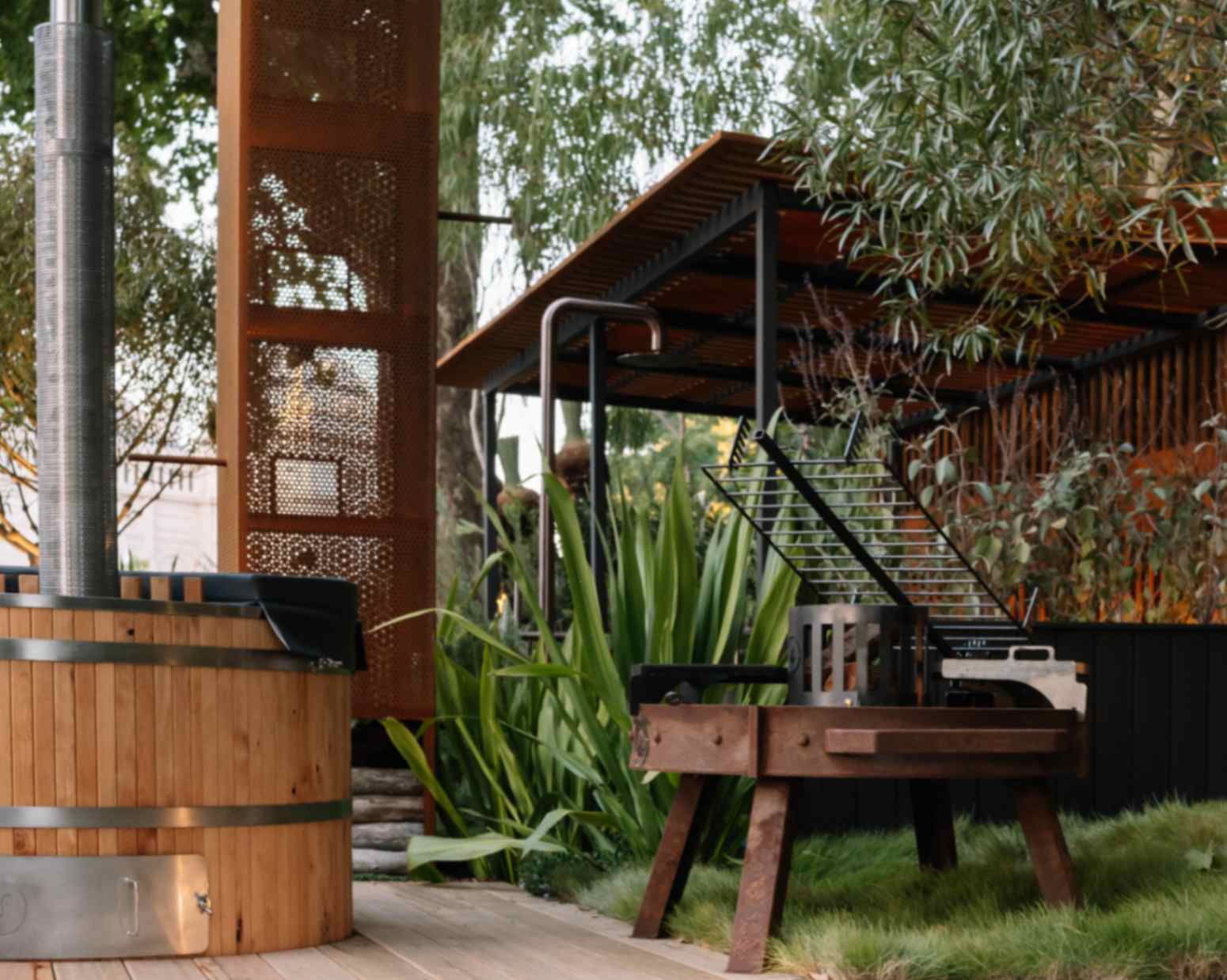
| #5 | Add dappled light via screens or perforated panels | Dynamic & Diffuse Light / Non-Rhythmic Stimuli | Use local timber, metal screens or laser-cut panels |
| #6 | Create a refuge corner — nook, window seat, bench | Refuge / Prospect | Include soft textures and views to a green zone |
| #7 | Introduce gentle water sound or reflective surface | Presence of Water | Use recirculating fountains or shallow water bowls |
| #8 | Layer indirect light (uplighters, wall washers) | Complexity & Order | Helps balance strong daylight and reduce glare |
| #9 | Plant climbers outside windows to moderate sun | Connection with Natural Systems | Choose species suited to local climate, preferring natives |
| #10 | Use a pattern checklist to audit your design | All / Composite | Review which patterns are underrepresented in your space |
These interventions can often be trialed at small scale, and then gradually scaled as budgets or client buy-in permits.
Also Read:
- Outdoor Shower Ideas for Aussie Homes: Planning, Design, & Inspiration
- How to Choose Tapware for Kitchen & Bathroom | Smart, Stylish & Sustainable Living
- [GUIDE] 29 Home Library Ideas: Design a Beautiful, Functional Reading Sanctuary
Next Step: Elevate Your Biophilic Aesthetic with Nero Tapware

Implementing Biophilic Design in Architecture Using Nero Tapware’s Sustainable Products
If you’re aiming for a truly luxurious biophilic aesthetic in Australia, the plumbing and accessory choices you make matter deeply. A tap, showerhead or towel rail isn’t just a utility component — it’s a tactile, visual and material connection point between user, water, and design. That’s exactly where Nero Tapware becomes a powerful partner in your biophilic design journey.
Why Nero Tapware Aligns with Biophilic Design
- Material integrity: Premium finishes—brushed nickel, matte black, gunmetal, aged brass—age gracefully and complement natural palettes.
- Australian design ethos: Locally crafted to suit regional climates, tastes, and durability standards.
- Nature-inspired form: Clean, minimalist geometry echoes organic curves and natural flow.
- Water efficiency:WELS-rated, lead-free fixtures unite sustainability with refined aesthetics.
- Complete cohesion: Coordinated accessories ensure visual harmony across all spaces.
How to Use Nero Tapware in Biophilic Projects

Nero Tapware’s Brushed Nickel Tapware Paired with Biophilic Design
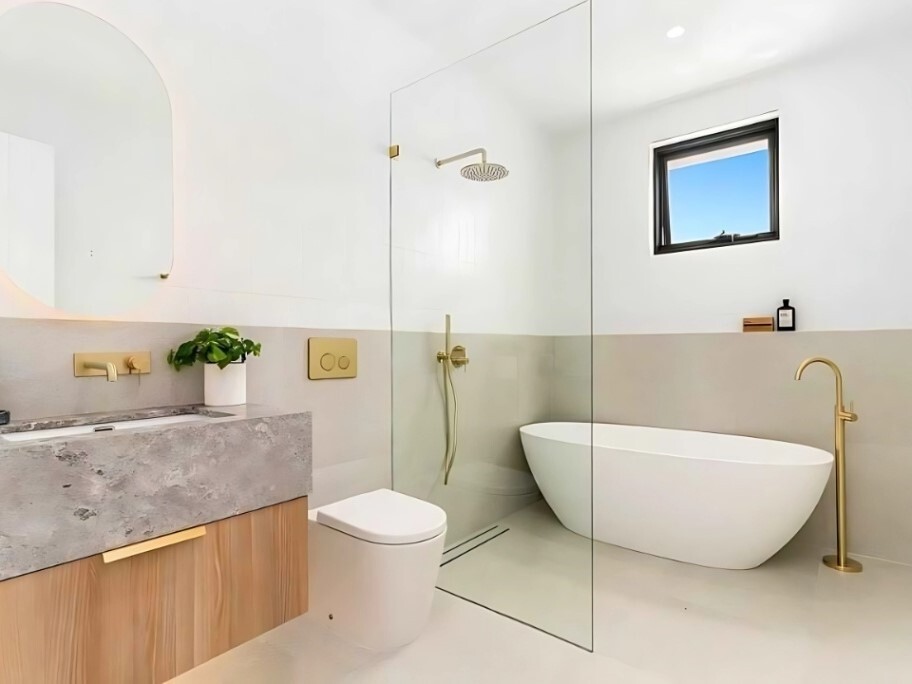
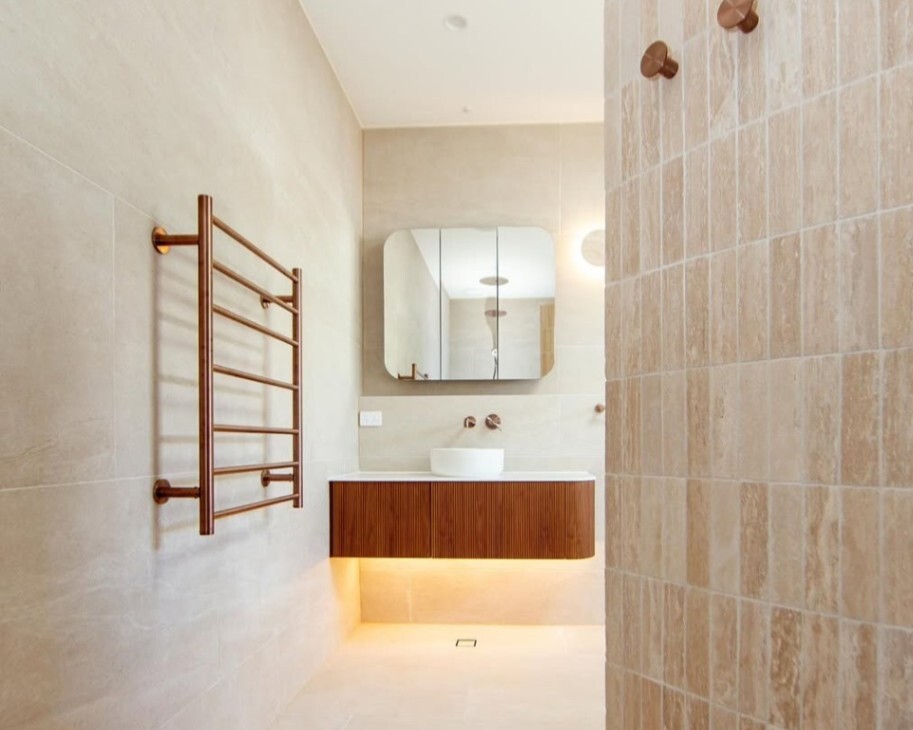
- Use nature-aligned accents: Pair warm brass finishes with timber or stone for organic warmth.
- Play with contrast: Set dark finishes against light textures for natural balance.
- Frame nature views: Position tapware near windows or courtyards to connect function and landscape.
- Maintain continuity: Repeat finishes across rooms for a cohesive, nature-inspired flow.
- Adapt to light and weather: Choose non-reflective finishes for outdoor or sunlit areas.
- Match scale to space: Use statement pieces in large bathrooms and slimline forms in compact ones.
If you’re ready to take your design project to the next level, I invite you to explore Nero Tapware’s catalogue and see how our luxurious yet grounded approach can elevate your nature-infused vision. Our popular collections include Mecca, Serenity, Zen, Opal, Bianca, Pure, and more!