The Ultimate Guide to Bluestone: Types, Benefits, Applications, Installation & Maintenance

Source: Eco Outdoor
Why Bluestone Remains a Timeless Choice
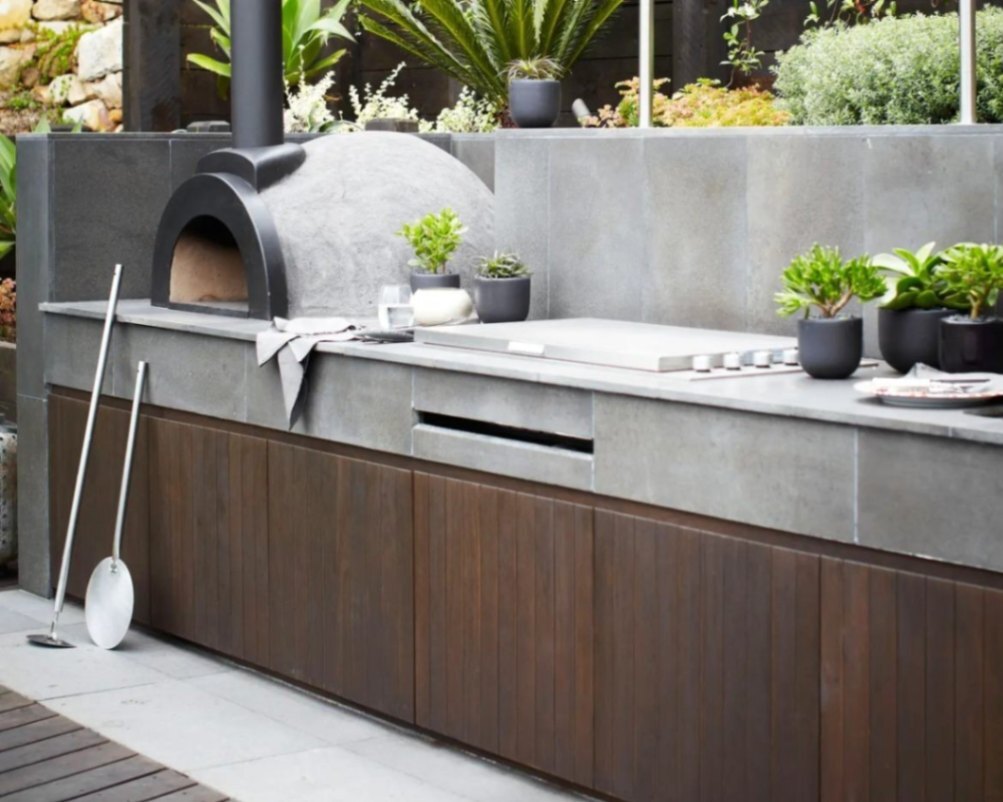
If you’ve ever admired the deep grey paving of Melbourne’s heritage laneways or the crisp, elegant coping around a coastal pool in Sydney, you’ve already met Bluestone — one of Australia’s most loved natural stones.
For homeowners and designers alike, Bluestone continues to deliver that elusive mix of durability, sophistication, and earthy authenticity. This bluestone ultimate guide walks you through its origins, composition, types, finishes, practical uses, and long-term maintenance — all tailored for Australian conditions.
What Is Bluestone? Understanding Its Origin and Composition
Definition and Composition
So, what is Bluestone really? The term can be confusing because it’s used commercially to describe several different stones around the world. In Australia, Bluestone almost always refers to basalt, an igneous rock formed when molten lava cools rapidly. That volcanic birth is what gives the stone its hallmark strength and fine-grained texture.
Bluestone typically appears in shades of blue-grey, charcoal, and smoky taupe, often with natural markings or subtle veining that add visual depth. In geological terms, it sits in the 6–7 range on the Mohs hardness scale, meaning it’s exceptionally resistant to wear — perfect for driveways, walkways, and patios.
Bluestone Around the World
While “Bluestone” is used widely, its meaning and geological type vary by region. The key is knowing which “bluestone” you’re working with — or buying.
- In Australia, “Bluestone” most commonly refers to Victoria basalt / olivine basalt. It’s dense, hard, and volcanic in origin.
- In Tasmania, the local “bluestone” often means dolerite (also a volcanic rock) rather than basalt.
- In South Australia, historically “bluestone” has sometimes referred to slate (a metamorphic rock) in local usage — less durable than basalt or dolerite.
- In the USA / North America, “bluestone” often refers to feldspathic sandstone (especially Pennsylvania bluestone).
- In Belgium / Europe, “Belgian Bluestone” is a limestone (also called “Petit Granit” or “Pierre Bleue”) — a sedimentary rock full of fossils, not volcanic basalt.
- In the UK / Wales, Preseli Bluestone (used in Stonehenge) is a spotted dolerite / igneous rock (dolerite is similar to basalt in formation)
- In New Zealand, Timaru Bluestone is a grey basalt — geologically similar to Victorian Bluestone — frequently used in local architecture.
Key buyer warning:Commercial labels can mislead. A stone marketed as “Bluestone” may be limestone, shale, or sandstone depending on origin. Always request the geological classification (basalt, dolerite, sedimentary rock) when purchasing, especially for Australian exterior use.
Also Read:Ultimate Travertine Guide: What It Is, Types, Cost, Installation & Care
Common Bluestone Types

Source: Eco Outdoor
1. Victorian Bluestone (Basalt)
- The benchmark “bluestone” in Australian landscaping. Dense, volcanic basalt quarried in Victoria.
- Features “cat’s paw” effects (small natural pitting) from trapped gas bubbles during cooling.
2. Harkaway Bluestone
- A refined variant of Victorian basalt, prized for more uniform hue and fewer visible defects. (Often sourced near Harkaway, Victoria.)
- Premium architectural projects often choose this for consistency.
3. Imported or Alternative Bluestones
- Chinese “Bluestone” — sometimes basalt, sometimes limestone; generally softer and lower density. Use for lower-impact zones only.
- Belgian Bluestone (Limestone / Petit Granit) — a sedimentary stone, not igneous. Excellent for interiors or climates without extreme freeze-thaw stress.
Other regional types
- Preseli Bluestone (Wales / UK) — a spotted dolerite, geologically close to basalt. Used in heritage and monumental uses.
- Timaru Bluestone (NZ basalt) — very similar in nature to Victorian basalt, used in local NZ architecture.
Also Read:Ultimate Granite Guide: From Luxe Benchtops to Bulletproof Floors (Everything You Need to Know)
Bluestone Surface Finishes and Textures
Bluestone (especially basalt) accepts a variety of finishes. The choice affects slip resistance, aesthetics, and maintenance.
- Natural Split / Cleft / Riven: The native surface — rough and irregular. Provides good grip, suited for rustic garden spaces.
- Sawn: Straight-cut surface, contemporary and clean. Usually smoother but less slip-resistant unless texturing is added.
- Flamed / Thermal: A heat treatment on sawn surface to create micro-roughness, improving slip resistance. Good for pool surrounds.
- Bush-Hammered / Shotblasted / Sandblasted: Textured finish made by mechanically pummeling or blasting the stone. Excellent for non-slip walkways.
- Honed / Satin: Smooth, matte finish. Good for indoor-outdoor transitions where a softer footfeel is desired.
- Polished: High-gloss finish revealing deep colours and veining. Best reserved for interior features, as exterior polished basalt can become slippery and show etching over time.
Pro Tip: For Australian outdoor use, flamed or bush-hammered finishes are safer in wet areas. Polished finishes are best for indoor feature walls or bespoke design accents.
How to Choose the Right Bluestone Finish
When selecting finish, match to your intended use, climate, and maintenance capacity:
| Application | Recommended Finish(s) | Reason / Caution |
| Pool surrounds / wet zones | Flamed / Thermal / Bush-Hammered | These finishes provide slip resistance in wet conditions |
| Driveways / high traffic | Sawn / Natural Split / Bush-Hammered | Durable, good traction, easier to maintain |
| Patios / alfresco | Honed / Natural Split / Full-range textures | Balanced aesthetics + practicality |
| Indoor floors / feature walls | Honed / Polished | Smooth transitions; avoid polished outdoors unless sheltered |
Additional criteria:
- Slip ratings/standards: Ensure finishes comply with Australian slip-rating (e.g. R10 / P4) when used near water.
- Maintenance tradeoffs: Textured finishes hide blemishes and require less upkeep; smoother finishes show wear more easily.
- Colour intensity: Some finishes (e.g. polished) deepen the stone’s tone; others (e.g. bush-hammered) lighten its apparent hue by scattering light.
Also Read:Limestone Ultimate Guide: Design Ideas, Costs & Care Tips
Popular Applications and Uses of Bluestone

Source: Eco Outdoor
Bluestone’s appeal lies in its versatility — it can ground a minimalist home, accentuate heritage architecture, or elevate a modern public plaza. Whether you’re renovating your backyard or specifying materials for a civic project, here’s how Bluestone can shine.
Residential Applications
1. Driveways & Courtyards
Bluestone’s dense composition and high load-bearing capacity make it ideal for driveways and front entries. When laid in a sawn or flamed finish, it provides excellent traction while maintaining that signature contemporary edge.
Pro Tip:For heavy-traffic driveways, choose 30–40 mm thick pavers with a properly compacted crushed rock base. It’ll prevent shifting or cracking over time.
2. Pool Coping & Surrounds
Few materials handle moisture and sun exposure like Australian Bluestone. Its low porosity resists salt damage, while thermal finishes keep it cool underfoot — a major plus for Aussie summers.
3. Garden Paths & Stepping Stones
For naturalistic gardens, crazy paving Bluestone adds a relaxed, organic feel. The irregular shapes and varied tones mimic the natural landscape beautifully.
4. Indoor Spaces
Honed Bluestone tiles transition effortlessly from outdoor to indoor living. In open-plan homes, it provides a seamless material flow from kitchen to alfresco.
Designer Insight: Honed Bluestone flooring pairs perfectly with timber accents — the contrast softens the overall look while keeping it modern.
Commercial and Public Spaces 🏢
Australian councils and architects love Bluestone for its long lifespan and minimal upkeep. It’s used widely in:
- Urban plazas and public courtyards
- Retail precincts and outdoor dining zones
- Educational and civic buildings
- Heritage street renewals and footpaths
Melbourne’s CBD paving is perhaps the best example — many laneways date back over a century yet still hold firm today. Bluestone’s ability to endure high traffic and extreme weather makes it a cost-effective long-term choice for cityscapes.
Compliance Note:When specifying bluestone for commercial or public ground-plane use, verify that the specific product has been tested to a suitable classification under AS 4586 (or other relevant standard) and that the installation system and performance history are appropriate for heavy pedestrian traffic and local weather conditions.
Decorative and Artistic Uses
Creative designers are increasingly using Bluestone for custom furniture, fire features, and sculptural elements. When polished or waterjet-cut, it takes on a strikingly refined look, ideal for:
- Fireplace surrounds
- Water features or garden fountains
- Custom dining tables or benches
- Feature walls and outdoor sculptures
Pro Tip: For sculptural projects, specify dense Victorian Bluestone — its uniform grain allows for precise carving and detailing.
Also Read:[GUIDE] Biophilic Design: Nature-Inspired Architecture That Elevates Mood, Health & Sustainability
3 Key Benefits of Bluestone: Why It’s a Smart Long-Term Investment

Source: Eco Outdoor
Why choose Bluestone over concrete or porcelain? It always comes back to three words — durability, beauty, and longevity.
1. Structural Strength and Durability
True Australian Bluestone (basalt) is nearly indestructible under normal residential or commercial use. It handles compression and foot traffic effortlessly, resists chipping, and maintains its integrity through Australia’s wild temperature swings.
Pro Tip: Unlike many imported stones, local Bluestone is less prone to delamination, making it a durable choice for cityscapes. However, regular maintenance is essential to ensure its longevity and performance.
2. Natural Aesthetic Appeal
There’s a reason architects love Bluestone — its colour depth and surface variation lend a sense of permanence that man-made materials simply can’t replicate. The subtle movement of greys, blues, and occasional rust undertones adds warmth and dimension to any setting.
Paired with native Australian plants, it creates harmony between built form and landscape — something concrete pavers rarely achieve.
3. Practical Advantages
- Slip Resistance: Flamed or bush-hammered finishes provide reliable grip in wet zones like pools and driveways.
- Thermal Stability: Unlike lighter stones, Bluestone stays cooler even in direct sun, making it barefoot-friendly.
- Low Maintenance: Routine sweeping and the occasional gentle wash are all it needs.
Pro Tip: When sealed with a penetrating, breathable sealer, Bluestone becomes even easier to maintain — especially in coastal or high-traffic areas.
Also Read:[Guide] Calming Colors in Interior Design: Expert Design Tips to Create Peaceful, Stylish Homes
Bluestone Paver Patterns, Layouts, and Design Tips

Source: Eco Outdoor
Pattern and layout dramatically influence the visual rhythm of a space. Here’s how to use Bluestone patterns effectively for Australian homes and public areas.
2 Classic Bluestone Paver Patterns
- Grid / Stretcher Bond: The most common layout for driveways and patios — clean, symmetrical, and timeless. Works best with sawn or honed rectangular tiles.
- Running Bond: Offset joints for a softer, more natural look that complements traditional or cottage-style homes.
4 Advanced & Decorative Bluestone Layouts
- French Pattern (Modular): Combines multiple sizes in a repeating modular layout. Perfect for alfresco zones or premium pool decks seeking a European aesthetic.
- Crazy Paving: Made from irregular pieces of Bluestone, this layout is quintessentially Australian — especially popular in native gardens and relaxed outdoor retreats.
- Circular / Fan Patterns: Used for courtyards or entry driveways where you want a sculptural, high-impact statement.
- Stepping Stone Paths: For minimalist gardens, large-format Bluestone stepping stones spaced over gravel or lawn look elegant and low-maintenance.
Find more paver patterns here!
Design Tip:Use contrasting joint colours (like light grout with dark Bluestone) to highlight geometry or define different functional areas.
Design Considerations
- Match your pattern to the architectural style — clean lines for modern homes, organic shapes for rustic designs.
- Combine finishes strategically — flamed for walkways, honed for adjacent entertaining areas.
- Always plan for proper drainage and gentle slope to prevent pooling — especially important for patios and pool decks.
Pro Tip:Avoid over-patterning small spaces. Simpler layouts make outdoor areas feel larger and more cohesive.
Also Read:[GUIDE] Dopamine Decor & Interior Design Tips to Boost Your Mood
Bluestone Maintenance and Care: Protecting Your Investment for Decades

Source: Eco Outdoor
Bluestone is one of the most durable natural stones available — but like any premium surface, it rewards a little care with a lifetime of beauty. If you’ve ever seen century-old Bluestone streets in Melbourne still looking magnificent, that’s proof of what good upkeep can achieve.
Routine Cleaning
To keep Bluestone looking rich and clean year-round:
- Sweep regularly to remove dirt and grit that could scratch the surface.
- Use a pH-neutral stone cleaner (never acidic or bleach-based) with warm water and a soft mop or brush.
- Rinse gently with a hose or low-pressure washer.
Expert Tip: In shaded or damp areas, prevent algae by applying a natural anti-fungal treatment twice a year. Avoid vinegar-based DIY mixes — they can etch the surface.
Sealing & Protection
Sealing isn’t about shine — it’s about longevity. A penetrating sealer absorbs into the stone, protecting from stains and moisture without changing the colour or texture.
- First sealing: After installation and full curing (around 48–72 hours).
- Re-sealing: Every 3–5 years, depending on use and exposure.
For pool areas or coastal properties, choose a salt-resistant sealer to prevent efflorescence and pitting.
Preventive Maintenance
- Inspect joints annually and reapply polymeric sand where needed.
- Direct downpipes and irrigation away to prevent pooling.
- For driveways, check edges and grout stability seasonally.
Professional Insight: Minor cracks or unevenness? Avoid “quick-fix” fillers. Engage a qualified stonemason to replace affected pavers — it ensures colour and surface consistency.
Restoring Aged Bluestone
Over time, Bluestone naturally develops a softer patina. Some owners love that lived-in look; others prefer a fresh finish. Professional honing or re-sealing can revive even century-old Bluestone without losing its authentic character.
Also Read:How to Choose Tapware for Kitchen & Bathroom | Smart, Stylish & Sustainable Living
Bluestone Cost, Quality, and Sourcing

Source: Eco Outdoor
What Affects Bluestone Pricing
Bluestone is an investment — not a commodity. In Australia, expect:
- Local basalt (Victorian Bluestone) at the upper range due to density, colour consistency, and sustainable quarrying.
- Imported limestone “Bluestone” from China or Vietnam can be cheaper but less durable.
When comparing, always assess cost per decade, not just cost per square metre. Genuine Australian basalt will outperform alternatives for generations.
How to Evaluate Quality
- Check density and absorption rates — lower porosity equals better durability.
- Examine surface consistency — avoid slabs with hairline cracks or excessive pores.
- Request lab test results or compliance certificates (AS/NZS 4456).
Designer’s Advice: A reputable supplier should offer both technical data sheets and on-site sample viewings. If they can’t, walk away.
Getting the Best Value
- Purchase from local quarries or certified distributors to guarantee authenticity.
- Combine full colour range pavers for a natural look — they’re often more affordable than “select blue.”
- Budget for professional installation and sealing — skimping here often leads to costly rework.
Expert Design Inspiration: Creating Harmony with Bluestone
Bluestone’s versatility lies in how beautifully it pairs with other materials and colours. Here’s how Australian designers are using it to create timeless spaces:
1. Contrast and Complement
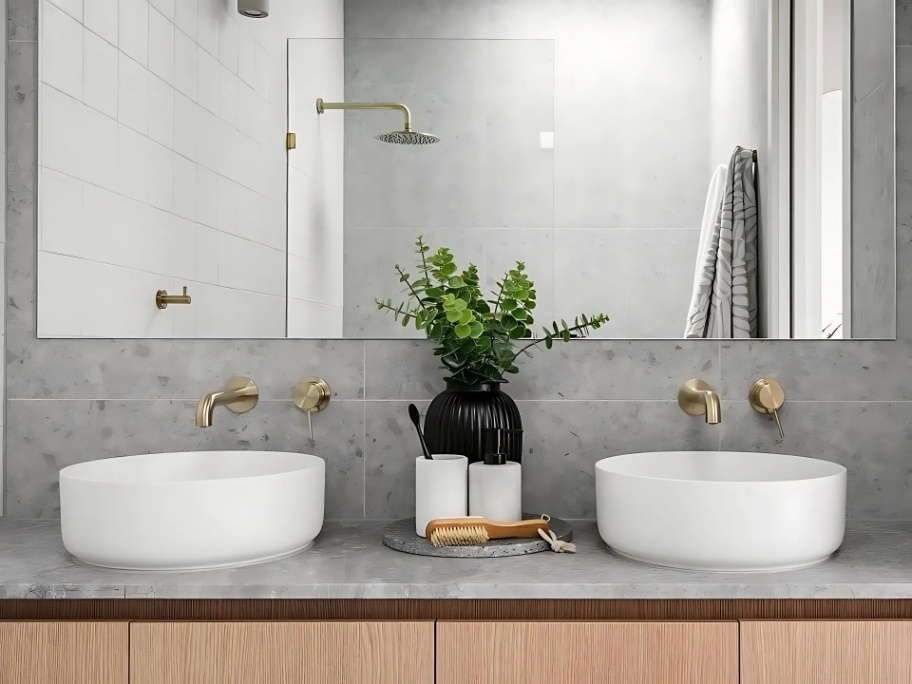
- Pair Bluestone’s cool grey tones with warm spotted gum decking or brushed brass tapware.
- For coastal homes, contrast it with white render or limestone walls to make the grey pop.
- In urban spaces, combine honed Bluestone flooring with matte black steel features for a grounded, contemporary edge.
2. Mixing Finishes for Depth
- Use flamed finishes outdoors for safety, and honed finishes indoors for softness.
- A mix of finishes in one project — say, flamed for steps and honed for patios — adds sophistication while maintaining function.
3. Lighting and Landscaping
- Edge lighting on Bluestone stairs creates dramatic shadow play at night.
- Native planting — like kangaroo paw or lomandra — brings softness and movement against the stone’s strength.
Design Tip: Bluestone looks its best under warm LED lighting (2700K–3000K). Cooler light tends to wash out the stone’s depth.
Next Step: Pair Your Bluestone with Nero Tapware’s Signature Collections
 Nero Tapware Brushed Bronze Shower Mixer Nero Tapware Brushed Bronze Shower Mixer |  Nero Tapware Brushed Bronze Wall Basin Mixer Nero Tapware Brushed Bronze Wall Basin Mixer |  Nero Tapware Brushed Bronze Tapware Nero Tapware Brushed Bronze Tapware |
A beautifully designed home doesn’t stop at the stone — it’s the finishing details that elevate a space from good to extraordinary.
Nero Tapware, an Australian brand renowned for its craftsmanship and innovation, offers collections that perfectly complement Bluestone’s natural sophistication. These include Kara, York, Claudia, Celia, Ecco, Dolce, Classic, Astra, Caravan, and Vibe.
Design Pairings That Work
- Gunmetal or Brushed Nickel tapware enhances the cool, architectural tone of honed Bluestone bathrooms.
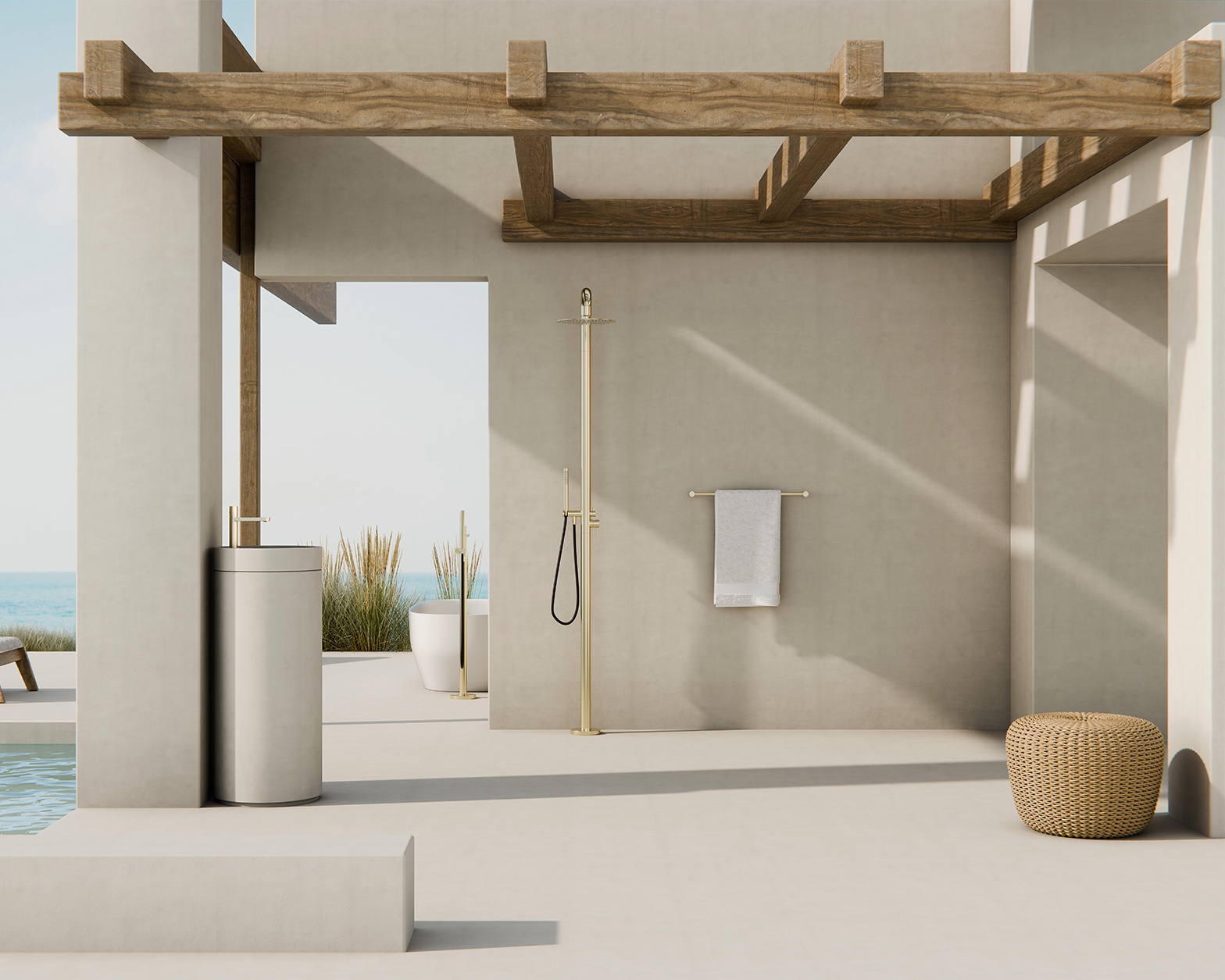
- Brushed Gold or Brushed Bronze contrasts beautifully with darker Bluestone, adding a subtle touch of luxury.
- Matte Black fixtures echo the depth and drama of flamed Bluestone patios and outdoor kitchens.
Each piece from Nero’s range is engineered for Australian conditions, combining water efficiency with timeless style — a natural partner for projects that demand enduring quality.
Explore the full Nero Tapware collection atnerotapware.com.au and discover how thoughtful fixtures can transform your Bluestone interiors into cohesive, design-led environments worthy of Australia’s best architecture.